Synthesis4 Sources
•January 6, 2026Daily briefing: Animals without brains sleep too — hinting at why we sleep at all
Quick Overview
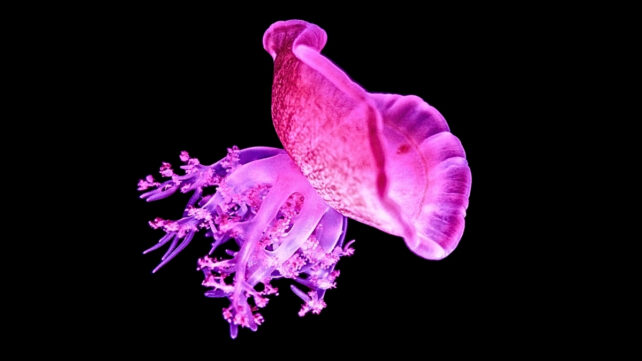
Research on jellyfish and sea anemones reveals that even brainless animals exhibit sleep-like states, suggesting sleep evolved as an ancient, fundamental mechanism for cellular repair, particularly in neurons, to counter DNA damage accumulated during wakefulness.
- Brainless Sleep: Jellyfish and sea anemones, lacking a centralized brain, demonstrate distinct sleep patterns.
- Ancient Origin: Sleep likely evolved about a billion years ago, predating complex brains, to protect cells from damage.
- DNA Repair: Sleep facilitates the repair of neuronal DNA damage that accumulates during active periods.
- Circadian Rhythms: Cnidarians exhibit circadian sleep cycles, often synchronized by melatonin, similar to humans.
- Sleep Deprivation Effects: Disrupted sleep leads to increased neuronal DNA damage and a subsequent need for more rest.
Key Points
Jellyfish Sleep Patterns and Characteristics
- Cnidaria, including jellyfish and sea anemones, exhibit sleep-like behavior despite lacking a centralized brain, possessing only simple neural networks along their bodies (ScienceAlert, Science Magazine).
- These animals show reduced activity and decreased arousal, similar to human sleep, for approximately one-third of the day (ScienceAlert, Science Magazine).
- When disturbed during sleep, jellyfish take longer to respond, analogous to a groggy human (Science Magazine).
- Sleep deprivation in jellyfish and sea anemones leads to an increase in neuronal DNA damage and prompts them to sleep longer the following day (ScienceAlert, Science Magazine).
- Both species show increased sleep duration when exposed to DNA-damaging agents like UV light or chemotherapy medication (ScienceAlert, Science Magazine).
Implications for the Evolution of Sleep
- The presence of sleep in brainless organisms like jellyfish suggests that sleep is an extremely ancient biological process, predating the evolution of complex brains (ScienceAlert, Science Magazine).
- This research challenges the long-held belief that sleep primarily evolved to manage complex brains, instead supporting the idea that its origin lies in the need for early neurons to repair themselves (Science Magazine, Reddit Science).
- The findings suggest that a fundamental purpose of sleep, even in simple nerve nets, is to facilitate efficient cellular maintenance and repair DNA damage accumulated during wakefulness (ScienceAlert, Reddit Science).
- The evolution of sleep, despite its inherent risks like increased vulnerability to predation, must offer a powerful benefit to counterbalance these compromises (ScienceAlert).
Research Perspectives and Similarities to Human Sleep
Focus areas by different sources:
- ScienceAlert: Highlights that the balance between DNA damage and repair is insufficient during wakefulness, and sleep provides a consolidated period for cellular maintenance, driven by DNA damage and cellular stress in simple nerve nets.
- Science Magazine: Emphasizes the remarkable similarity of jellyfish and sea anemone sleep patterns to humans, including the effect of melatonin and increased sleep after deprivation. It quotes experts stating that sleep likely arose with the first neurons.
- Reddit Science: Directly states that jellyfish sleep like humans despite lacking brains, bolstering the theory that sleep evolved to protect DNA in individual nerve cells.
Outline
Introduction: A Surprising Discovery in Simple Organisms
Sleep Observed in Animals Without Brains
Cnidarians as Key Study Subjects
Characteristics of Sleep in Cnidarians
Behavioral Signs of Sleep
Sleep Duration and Patterns
Circadian Regulation and Environmental Sensitivity
The Inherent Risks of Sleep
Experimental Evidence Supporting Cnidarian Sleep
Observational Methods
Response to Stimuli (Arousal Threshold)
Impact of Sleep Deprivation
Melatonin's Sleep-Inducing Effect
The Evolutionary Purpose: Cellular Maintenance and DNA Repair
Link Between Wakefulness, DNA Damage, and Sleep
Sleep as a Period for Efficient Cellular Repair
Implications for the Evolution of Sleep
AI saves you up to 14 minutes