Synthesis3 Sources
•January 7, 2026How Aviation Emissions Could Be Halved Without Cutting Journeys
Quick Overview
A new study indicates aviation emissions can be halved without cutting journeys by prioritizing operational efficiency through full flights, efficient aircraft, and denser economy seating, proving more effective than sustainable fuels or offsets.
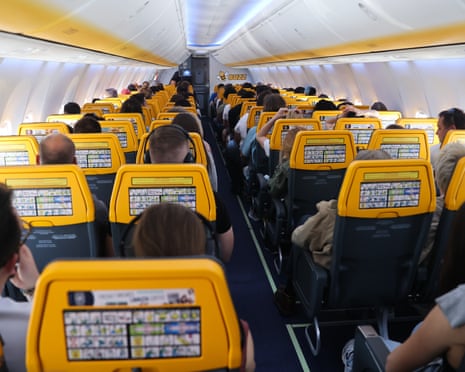
- Primary strategies: Utilizing fuel-efficient aircraft, switching to all-economy layouts, and maximizing flight occupancy (e.g., 95%).
- Emission reduction potential: Could halve aviation emissions by 50-75% without cutting journeys, with an immediate 11% reduction from existing fleet optimization.
- Superiority to alternatives: These operational efficiency measures are deemed more effective than current sustainable aviation fuels or problematic carbon offset schemes.
- Premium class impact: First and business class passengers are responsible for 3 to 13 times more emissions per journey than economy travelers.
- Current inefficiencies: Many airlines operate older aircraft, maintain lower load factors (average 80% in 2023), and increase premium seating.
- Geographic disparities: US airports are 14% more polluting than the global average, with Atlanta and New York among the least efficient.
Key Points
Core Strategies for Emission Reduction
- Three key strategies identified for halving aviation emissions without cutting journeys: getting rid of premium seats, ensuring flights are near full, and using the most efficient aircraft (The Guardian, Reddit Science, Slashdot).
- These efficiency measures are considered far more effective than 'sustainable' fuels or carbon offsets (The Guardian, Slashdot).
- Combining these strategies could cut fuel use and emissions by 50-75% (The Guardian).
- Immediately reducing global emissions by 11% is possible through better strategic use of existing fleets (Reddit Science).
Key Data and Impact
- Study analyzed over 27 million commercial flights out of approximately 35 million in 2023 (The Guardian, Slashdot).
- Examined flights between 26,000 city pairs, carrying 3.5 billion passengers across 6.8 trillion kilometers (The Guardian, Slashdot).
- Flights caused 577 million tonnes of CO2 emissions, equivalent to Germany's annual emissions (The Guardian).
- US flights were 14% more polluting than the global average, accounting for a quarter of all aviation emissions (The Guardian, Slashdot).
- First and business class passengers are responsible for more than three times the emissions of economy passengers, and up to 13 times more in the most spacious premium cabins (The Guardian, Slashdot).
- Average 'load factor' (seat occupancy) in 2023 was almost 80% (The Guardian, Slashdot).
Operational Inefficiencies and Geographical Variations
- Inefficiencies exist: Despite airlines claiming efficiency, the reality is 'very inefficient' due to old aircraft, premium seating, and under-loaded planes (Prof Stefan Gössling, The Guardian).
- Geographical disparities: More polluting flights were common from airports in the US and Australia, particularly smaller ones, as well as parts of Africa and the Middle East (The Guardian).
- More efficient regions: Airports in India, Brazil, and south-east Asia were dominated by less polluting flights (The Guardian).
- Specific airport examples: Atlanta and New York were almost 50% worse than the most efficient airports like Abu Dhabi and Madrid (The Guardian, Slashdot).
Outline
Introduction to Aviation Emission Reduction Strategies
Core Proposal: Halving Emissions Through Operational Efficiency
Study Scope and Significance
Context: Rising Aviation Emissions Despite Efficiency Gains
Key Strategies for Emission Reduction
Strategy 1: Eliminating Premium Seating
Strategy 2: Maximizing Flight Occupancy ('Load Factors')
Strategy 3: Utilizing Most Efficient Aircraft
Combined Impact of Strategies
Current State of Aviation Efficiency and Emissions
Global Efficiency Variations
Regional Efficiency Disparities
Country-Specific Emission Profiles
Least and Most Efficient Airports and Routes
Challenges and Policy Implications
Inefficiency Despite Economic Interest
Limitations of Existing Emission Reduction Schemes
Proposed Policy Interventions
AI saves you up to 10 minutes


